Bee Farming. The Untapped Liquid Gold.
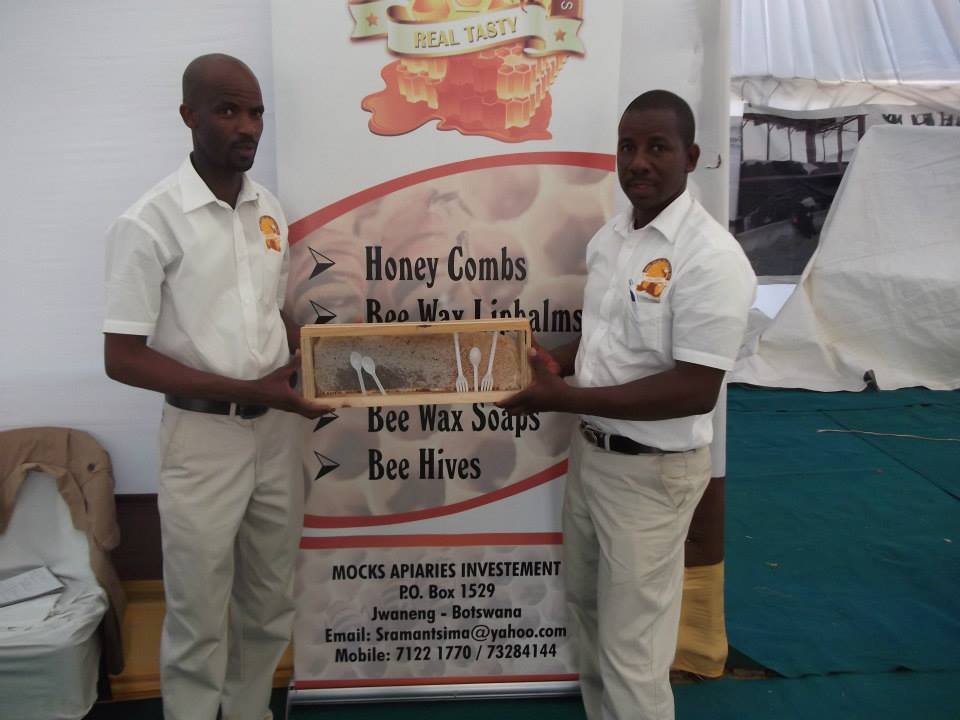
Beekeeping has skyrocketed in popularity in recent years and Serefete Ramantsima, co-owner of Real Tasty Products, tells Farmers Review’s reporter, Kedidimetse van der Westhuizen, that he believes rural communities as well as hobbyists can cash in on Botswana’s honey shortage.
While it has taken Serefete years to fully understand and appreciate that he had the talent and passion to work with bees, he says that he has always loved bees for as long as he can remember. In his teenage years, he used to hunt and harvest honey in the bush whilst looking after the family livestock.
“I started professional Beekeeping in 2006, through the assistance of Local Enterprise Authority (LEA) and Ministry of Agriculture.” Says Serefete. Starting out with several hives in 2006, the 41 years old Serefete, who hails from Kanye, has since grown his apiary to 28 hives and plans to increase them as time goes on. Ramantsima works full time as a Shift Foreman at Debswana’s Jwaneng Mine and even though he plans to go commercial in the near future, he has no intentions of quitting his job to go into beekeeping full-time at this point.
In 2008, Serefete enrolled for training through LEA. The organization subsequently assisted him to get funding to pursue his dream after completion of the bee keeping course. “We were funded to a tune of P21, 000 in 2008 to start the project.” He elaborates.
While the business is doing well, it hasn’t been all smooth sailing but despite the many challenges, Serefete is grateful for the assistance he got from LEA and believes that the training they got through the organization has benefited their company immeasurably as they produce quality bee products which are in great demand.
Harvesting
Beekeepers have several options available for their produce. They can sell it privately to individuals or in bulk to packers who then package and resell it. Real Tasty Products has opted for the former, they produce and sell raw honey as well as bees wax products such as lotions, lip balms and soap directly to consumers.
Serefete harvests honey from December to May and leaves the remainder for the bees for food in winter. The harvested honey is stored in drums and used to produce the Real Tasty Products’ range of products. He says that no honey is sold in bulk by their company.
Ramantsima says that their bee farming business is growing steadily and as stated above, hopes to increase their beehive in the coming years which will enable them to increase their honey production.
“We have gotten good reviews from shows, shops and individuals that we sell to, applauding us for the quality of products and service that we give them.” Says Serefete.
He attributes their prosperity in bee keeping to the passion they have for the industry. “Our passion has helped us to garner us support from different stakeholders like United States representative, Ambassador Miller who always invite us to US embassy for beekeeping business meetings,” he continued.
Hive management
Serefete and his partner implements a strict hive management plan which includes checking for pests and diseases. The most serious diseases such as American and European foulbrood can wipe out the entire beehive if they are not caught on time.
Fortunately for Serefete he has had none of these threats in his hives so far, but he remains vigilant and is always on the lookout for anything that might disturb his bees. He liaises with other farmers in his network in order to remain updated on what’s out there.
Challenges
Despite the growth of Real Tasty Products, Serefete says they have a challenge producing enough quality honey to satisfy his clients due to unfavourable weather conditions in Botswana, especially Jwaneng where he is based, as it is in the periphery of the Kalahari Desert. He however noted that last year was fruitful because of the good rains, hence ensuring growth of forage.
The bee master says that in order to increase their production and go commercial, they requested a piece of land from government in 2015, but up to today, they haven’t received a satisfactory answer from the government as to why they haven’t been allocated the land. He further explained that this is hindering the growth of their industry in general as most bee farmers decry land. “The lack of land to fully operate our businesses in apiculture is resulting in the gradual but slow growth of the sector in Botswana.” he stressed.
The other major limitations that affect the growth of the beekeeping industry in the country include lack of beekeeping knowledge. Apart from that, shortage of bee equipment, pests, pesticide threat, and poor infrastructural development, shortage of bee forage in Botswana as well as shortage of skilled manpower are other main challenges facing the local subsector.
Untapped Potential
Although Serefete has come a long way with bee production, he believes the industry could play an even bigger role in the local economy if government can support it the same way it supports other agricultural subsectors such as beef farming or arable farmers.
“With the necessary support, apiculture is a source of employment and income for many households. And it could also become a very good source of nutrition for Batswana,” he said. Crop farmers also benefit highly from these miniature livestock as they bees are key pollinators of various crops and fruits.
Lack of information and proper documentation is one key drawback for Batswana who want to venture into bee keeping commercially. Even though this subsector has immense potential, there is no adequate research information regarding challenges and opportunities available in honey production. Most folks in the country still depend on the old indigenous way of collecting honey. There is nothing wrong with that as indigenous knowledge does contribute to the honey business. However, to facilitate the development of the bee farming sector, it is essential to combine the indigenous knowledge with modern farming and management practices to help farmers improve the quantity and quality of the harvested honey as well as related products.
To establish a viable, commercial and profitable bee farming industry, government must assist farmers by availing strategies to support them through policies, capacity building to equip beekeepers with relevant bee keeping business information, and cooperative formation as well as establishment of a robust value chain approach.
Botswana has a long way to go if it wants to be a player in the bee farming industry. For example, Neighbouring South Africa, which produces approximately 2000t of honey annually, consumes twice as much and subsequently imports the balance. Then there is Ethiopia, The country considered to be the leading honey producer in Africa, as well as one of the top ten largest honey producing countries in the world. Ethiopia exports more than 40 000t of honey worldwide annually despite the fact that beekeeping is still considered as an undeveloped agricultural subsector in that country.
Future plans
Ramantsima says that plans are underway to start a national beekeeping association whose core mandate will be to represent beekeepers at national level and to call on government to assist beekeepers with honey distribution depots. “The association will help a great deal as all our challenges will be channelled through a collective voice.” He emphasized. He also explained that the association will enhance their networking with countries which could lead to regional and global business opportunities as well as partnerships.
“I would like to become more involved in the community and bee conservation. We have started holding training and talks to encourage upcoming beekeepers to adapt best practices when engaged in honey production.” Says Serefete
He adds that he recently assisted some youths with 10 hives to go and start their bee keeping business. He encourages those that want to know more about the business to contact him or to simply arrange to visit him in Jwaneng where he will show them how to capture bees, make products and share any other general information they may need with regards to beekeeping.
Serefete encourages the youth, especially those in rural communities, to consider beekeeping as a business in these tough economic times. He believes that many rural communities have access to beekeeping resources, such as land that they are not using. Most families in rural Botswana have these small, two to five hectare farms, with all the shrubs and bushes lying idle which can be used to set up a beehives. He explains that the local shortage of honey products, especially fresh, raw organic honey, creates vast opportunities for beekeepers in these rural areas which have adequate bee forages.